What Is the Mediterranean Diet. Are you searching for a diet that helps you lose weight and boosts your health? You’re not alone. The Mediterranean diet focuses on whole grains, fruits, veggies, and healthy fats. It’s been shown to help with weight loss and lower the risk of chronic diseases.
A balanced and varied eating pattern is key. It’s full of nutrients and antioxidants. This diet is not just about food; it’s a way of life. It includes regular exercise and eating with others.
By choosing this diet, you can live a healthier life. In this article, we’ll dive into the Mediterranean diet’s core principles. We’ll see how it can help you reach your weight loss goals.
Table of Contents
ToggleUnderstanding the Basics of the Mediterranean Diet
The Mediterranean diet is more than just a way to eat. It’s a lifestyle that has been shown to be very healthy. It focuses on eating whole, unprocessed foods.
What Is the Mediterranean Diet: Key Components of the Diet
The Mediterranean diet has several important parts that make it nutritious. These include:
- High intake of fruits and vegetables: A variety of colorful fruits and vegetables are eaten every day.
- Whole grains: Foods like brown rice, quinoa, and whole-wheat bread are chosen over refined grains.
- Healthy fats: Olive oil is the main fat source, providing good fats for heart health.
- Lean proteins: Fish and poultry are eaten in moderation, with a focus on fatty fish for omega-3s.
Differences from Other Diets
The Mediterranean diet is different from many others because it focuses on adding good foods, not just cutting out bad ones. It encourages eating a wide variety of nutrient-rich foods. This makes it a great choice for a long-term eating plan.
This diet is also very flexible. It can be tailored to fit different cultures and personal tastes. This way, people can enjoy their favorite foods while getting the diet’s health benefits.
By focusing on whole foods and healthy fats, the Mediterranean diet offers a balanced and fulfilling way to eat. It’s both enjoyable and good for your health.
Nutritional Benefits of the Mediterranean Diet
The Mediterranean diet is packed with nutrients that boost health and happiness. It focuses on whole foods, giving you a balanced mix of essential nutrients.
Rich in Healthy Fats
This diet is known for its healthy fats, like those in olive oil. These fats are good for your heart. They help lower bad cholesterol and reduce heart disease risk.
- Monounsaturated fats reduce inflammation.
- They improve cholesterol levels.
- Olive oil is full of antioxidants.
High in Fiber and Nutrients
The Mediterranean diet is rich in fiber and nutrients. It includes lots of fruits, vegetables, and whole grains. These foods are full of fiber, vitamins, minerals, and antioxidants.
- Fiber helps with digestion and feeling full.
- Whole grains give you lasting energy.
- Fruits and vegetables are full of vitamins and minerals.
Antioxidant Properties
This diet is also high in antioxidants from plant-based foods. Antioxidants fight oxidative stress and inflammation. These are linked to many chronic diseases.
- Antioxidants reduce oxidative stress.
- They’re found in fruits, vegetables, and nuts.
- Eating foods rich in antioxidants helps manage inflammation.
The Mediterranean diet offers a wide range of health benefits. It helps improve overall health and lower the risk of chronic diseases.
How the Mediterranean Diet Promotes Weight Loss
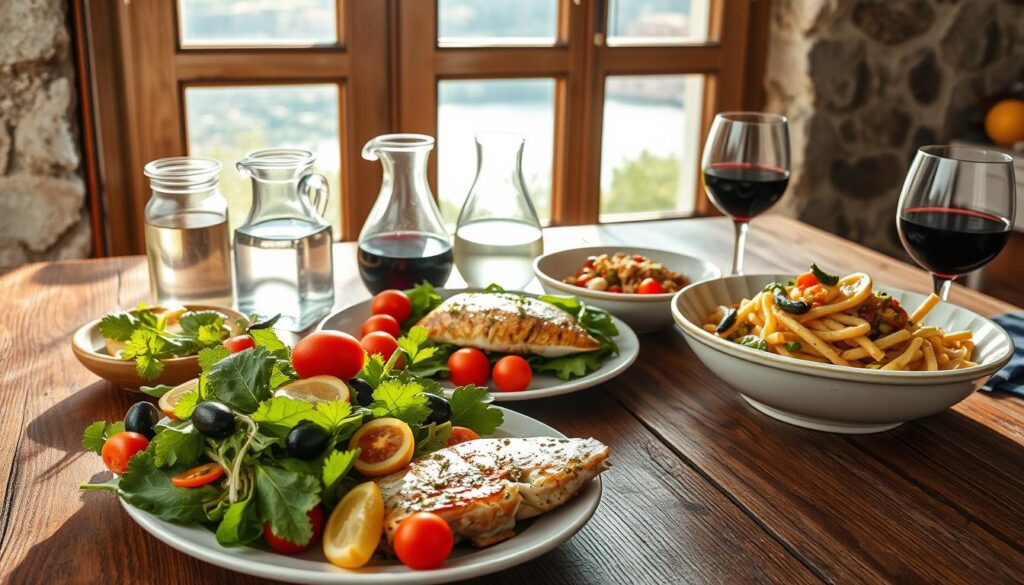
The Mediterranean diet is known for helping people lose weight. It focuses on eating whole, unprocessed foods. These foods are full of nutrients and help manage weight well.
Sustainable Weight Management
This diet is great because it’s easy to stick with. Unlike strict diets, the Mediterranean diet offers a balanced eating plan. It’s designed to help you keep the weight off for good.
Sustainable weight management comes from eating whole grains, fruits, veggies, lean proteins, and healthy fats. These foods are not only good for you but also keep you feeling full. This helps prevent overeating.
Lower Caloric Intake Through Whole Foods
The Mediterranean diet naturally helps you eat fewer calories. It focuses on whole foods, which are often lower in calories than processed foods. Eating more fruits, veggies, and whole grains can help you eat less while feeling full.
For instance, oatmeal with fresh fruits and nuts for breakfast can keep you full until lunch. A salad with lean protein and veggies for lunch is also filling and low in calories.
By following a Mediterranean diet meal plan, you can enjoy tasty, healthy meals that help you lose weight. The main idea is to eat whole foods and avoid processed, high-calorie foods.
Key Food Groups in the Mediterranean Diet
The Mediterranean diet emphasizes several key food groups for health. These groups are the diet’s foundation, leading to many health benefits.
Fruits and Vegetables
Fruits and vegetables are key in the Mediterranean diet. They’re packed with vitamins, minerals, and antioxidants. Try to have a variety of colors on your plate for a wide range of nutrients.
- Leafy greens like spinach and kale
- Berries such as blueberries and strawberries
- Citrus fruits like oranges and lemons
- Tomatoes and bell peppers
You can easily add these foods to your diet. Try them in salads, smoothies, or as snacks.
Whole Grains
Whole grains are vital in the Mediterranean diet. They offer fiber, vitamins, and minerals for heart health and digestion.
Examples of whole grains include:
- Whole wheat bread
- Brown rice
- Quinoa
- Oats
Start your day with oatmeal, use whole wheat bread for sandwiches, or serve brown rice as a side dish.
Lean Proteins
Lean proteins are essential in the Mediterranean diet. They help the body repair and maintain itself.
Common sources of lean protein in the Mediterranean diet include:
- Fatty fish like salmon and sardines
- Poultry such as chicken and turkey
- Legumes like lentils and chickpeas
- Nuts and seeds
These proteins can be grilled, baked, or sautéed with herbs and spices.
By focusing on these food groups, you can make a balanced diet. Look for mediterranean diet recipes to find new ways to include these foods in your meals.
Incorporating Healthy Fats into Your Meals
The Mediterranean diet highlights the role of healthy fats. These fats are key for heart health and brain function. They also help with weight management by making you feel full.
Olive oil is a mainstay in the Mediterranean diet. It’s a rich source of healthy fats. Use it for cooking, dressing salads, or as a bread dip. Rich in monounsaturated fats, olive oil lowers bad cholesterol and heart disease risk.
Olive Oil as a Central Ingredient
Olive oil is more than just a cooking oil. It’s a core part of Mediterranean cuisine. Here are ways to add it to your diet:
- Use it as a base for salad dressings
- Drizzle it over vegetables before roasting
- Make a marinade for meats and fish using olive oil, herbs, and spices
Nuts and Seeds for Snacking
Nuts and seeds are great for healthy fats in the Mediterranean diet. They’re nutritious and versatile, making them ideal for snacking. Almonds, walnuts, pumpkin seeds, and chia seeds are full of healthy fats, protein, and fiber. They help keep you full and support heart health.
Enjoy nuts and seeds in many ways: as a snack, in salads, or in smoothies. Just remember to eat them in moderation because of their high calories.
Sample Meal Plan for the Mediterranean Diet
Starting the Mediterranean diet can be easier with a sample meal plan. A good meal plan helps you get the right nutrients. It also lets you enjoy the diet’s flavors and health perks.
Breakfast Ideas
Breakfast is key in the Mediterranean diet. Here are some healthy breakfast ideas:
- Greek yogurt with honey and walnuts
- Oatmeal with fresh berries and a sprinkle of cinnamon
- Avocado toast on whole-grain bread with a fried egg
- Smoothie bowl with spinach, banana, almond milk, and chia seeds topped with almonds and shredded coconut
Lunch Suggestions
For lunch, try these Mediterranean diet-friendly options:
- Grilled chicken salad with mixed greens, cherry tomatoes, cucumber, red onion, feta cheese, and a drizzle of olive oil and lemon juice
- Whole-grain pita stuffed with hummus, tabbouleh, grilled chicken, and sliced cucumber
- Quinoa and black bean bowl with roasted vegetables, feta cheese, and a lemon-tahini dressing
- Grilled salmon with a side of mixed greens and a citrus vinaigrette
Delicious Dinner Options
Dinner can be a highlight with these Mediterranean-inspired recipes:
- Grilled lamb chops with roasted vegetables and a side of quinoa
- Baked salmon with a herb crust, served with brown rice and steamed asparagus
- Vegetarian moussaka with eggplant, zucchini, and a rich tomato sauce
- Chicken shawarma with tzatziki sauce, served in a whole-grain pita with tomato and onion
Here’s a sample 3-day meal plan to get you started:
| Day | Breakfast | Lunch | Dinner |
|---|---|---|---|
| Monday | Greek yogurt with honey and walnuts | Grilled chicken salad | Baked salmon with roasted vegetables |
| Tuesday | Oatmeal with fresh berries | Whole-grain pita with hummus and tabbouleh | Grilled lamb chops with quinoa |
| Wednesday | Avocado toast with a fried egg | Quinoa and black bean bowl | Vegetarian moussaka |

By adding these meal ideas to your daily routine, you’ll be on your way to enjoying the Mediterranean diet’s health benefits.
The Role of Physical Activity in the Diet
The Mediterranean diet is more than just food. It’s a lifestyle that includes regular exercise. This approach is key to good health and managing weight.
Building a Balanced Exercise Routine
To match the Mediterranean diet, aim for a balanced workout routine. Include aerobic exercise, strength training, and flexibility exercises. Aerobic exercises like brisk walking or cycling boost heart health. Strength training builds muscle, which helps your metabolism. Flexibility exercises, like yoga, improve your range of motion and lower injury risk.
Try to do at least 150 minutes of moderate aerobic activity or 75 minutes of vigorous activity weekly. Also, do strength training on two or more days a week to boost fitness.
Activities Common in Mediterranean Cultures
Mediterranean cultures are known for their active lifestyles. They enjoy activities like walking and dancing. Walking is part of daily life, like going to markets. Dancing, like Greek Zorbas or Spanish flamenco, is fun and keeps you moving.
Other favorite activities include cycling, hiking, and swimming. These not only keep you fit but also let you enjoy nature and socialize.
By combining the Mediterranean diet with regular exercise, you can live a healthier life. This lifestyle supports weight loss and overall well-being.
Social and Cultural Aspects of the Mediterranean Diet
The Mediterranean diet is more than just food. It’s about how we connect with others through meals. It changes how we eat and how we interact with friends and family.
Family Meals and Community Eating
Family meals and eating together are key in the Mediterranean diet. In these cultures, meals are a time to bond with loved ones. Sharing food and company is seen as vital for health and happiness.
In Greece, Sundays are for big family meals. Everyone gathers for roasted lamb and side dishes. Italy’s Sundays are for family and friends to come together for long, delicious meals.
To bring this into your life, try having family dinners or hosting meals for friends. Look for local cooking classes or join a cooking club. It’s a great way to meet people and learn new recipes.
Importance of Mindful Eating
Mindful eating is a big part of the Mediterranean diet. It means eating slowly and fully enjoying your food. This can help you eat better and feel fuller longer.
| Benefits of Mindful Eating | Description |
|---|---|
| Enhanced Enjoyment | Savoring your food can increase your enjoyment of meals. |
| Better Digestion | Eating slowly can improve digestion. |
| Reduced Overeating | Paying attention to your hunger and fullness cues can help prevent overeating. |
By embracing the Mediterranean diet’s social and cultural sides, you can improve your eating and your social life. It’s a win-win for your health and happiness.
Potential Challenges and Solutions
The Mediterranean diet is great for your health, but it comes with its own set of challenges. Knowing these challenges and how to solve them is key to a successful diet change.
Overcoming Dietary Restrictions
One big challenge is dealing with dietary restrictions. This could be because of allergies, intolerances, or just personal taste. It’s important to find alternatives that fit the diet.
Navigating Common Dietary Restrictions:
- For gluten intolerance, focus on naturally gluten-free foods like fruits, vegetables, and lean proteins.
- If you’re lactose intolerant, consider dairy alternatives or lactose-free products.
- For vegetarians or vegans, emphasize plant-based proteins and healthy fats.
Creating a balanced meal plan that meets your dietary needs while following the Mediterranean diet is doable with some planning. Here’s a simple table to help you swap common ingredients:
| Ingredient | Alternative |
|---|---|
| Wheat pasta | Zucchini noodles or quinoa pasta |
| Dairy cheese | Vegetarian cheese or nutritional yeast |
| Refined oils | Olive oil or avocado oil |
Staying Motivated Long-Term
Keeping motivated is essential for any diet change, including the Mediterranean diet. Setting achievable goals and celebrating small wins can help a lot.
Tips for Long-Term Motivation:
- Keep a food diary to track your progress and identify patterns.
- Explore new recipes to keep your meals interesting.
- Engage with a community, either online or in-person, who share your dietary interests.
By understanding the challenges and finding ways to overcome them, you can successfully adopt the Mediterranean diet. You’ll enjoy its many health benefits.
Scientific Research Supporting the Mediterranean Diet
Many studies have shown the Mediterranean diet’s health benefits. You can find a lot of research on its effects on health.
Studies Linking the Diet to Health Benefits
Studies have found the diet can improve heart health, lower obesity risk, and boost brain function. A key study in the New England Journal of Medicine showed it cuts down heart problems in high-risk people.
The diet’s healthy fats, fiber, and antioxidants are key to its benefits. It helps manage weight, improves insulin use, and lowers inflammation.
Personal Success Stories
Many people have seen big health gains with the Mediterranean diet. A Journal of the American Medical Association study shared success stories. People lost a lot of weight and got healthier.
These stories can inspire you. By choosing healthy foods and staying active, you can reach your health goals.
Tips for Getting Started with the Mediterranean Diet
Starting the Mediterranean diet is easy with a few simple steps. Add more fruits, vegetables, and whole grains to your meals. Begin by swapping butter for olive oil or choosing whole grain bread over white.
Simple Swaps for Your Diet
Start by using herbs and spices for flavor instead of salt. Nuts and seeds make great snacks. Try replacing red meat with lean proteins like chicken and fish. These changes will help you adopt the Mediterranean diet.
Tracking Your Progress and Results
Tracking your progress is key to getting the most from the Mediterranean diet. Keep a food diary to track your eating and health changes. Regularly checking your progress keeps you motivated and helps you make needed adjustments.
FAQ
What are the core principles of the Mediterranean diet?
The Mediterranean diet focuses on eating lots of fruits, veggies, whole grains, and healthy fats like olive oil. It’s more than just food; it’s a way of life. It includes staying active and enjoying meals with others.
How does the Mediterranean diet promote weight loss?
It encourages eating whole, unprocessed foods, which helps you eat fewer calories but feel full. This balanced diet makes it easier to stick to over time.
What are the key food groups in the Mediterranean diet?
The diet centers on fruits, veggies, whole grains, and lean proteins. These foods are key to a balanced, nutritious diet.
How can I incorporate healthy fats into my meals?
Use olive oil as your main fat source. Snack on nuts and seeds, and eat fatty fish. These foods are good for your heart and taste great.
What are some tips for getting started with the Mediterranean diet?
Start by making small changes, like using olive oil instead of butter. Eat more fruits and veggies. Keeping track of your progress can keep you motivated.
How does physical activity play a role in the Mediterranean diet?
Being active is key to the Mediterranean lifestyle. Aim for a mix of cardio, strength training, and flexibility exercises. This helps you stay healthy and feel good.
What are the benefits of the Mediterranean diet for heart health?
The diet is great for your heart. It lowers the risk of heart disease. The healthy fats in olive oil and the fiber from fruits and grains are big contributors.
Can the Mediterranean diet be adapted to various cultural and personal preferences?
Yes, it’s very flexible. You can make it fit your own tastes and needs. Its core ideas work with many different cuisines and diets.