Workouts to Lose Weight at Home: Are you tired of spending hours at the gym with little to show for it? You’re not alone. Many struggle to find time or motivation for gym workouts. But, you can reach your weight loss goals with effective home workouts.
A good home workout plan can be as effective as a gym routine. You can burn calories, build strength, and boost your health from home.
As you look into the routines and methods in this article, you’ll see how simple it is to start workouts to lose weight at home. Let’s explore the world of home workouts together.
Table of Contents
ToggleUnderstanding Weight Loss and Workouts
Losing weight isn’t just about exercising; it’s about understanding the science behind it. Knowing how weight loss works helps you create a fitness plan that fits your needs.
The Science Behind Weight Loss
Weight loss is about burning more calories than you eat. This can happen through diet, exercise, and lifestyle changes. Your metabolism is key, as it shows how well your body burns calories.
Metabolism is affected by age, genetics, and muscle mass. Building muscle through strength training boosts your metabolic rate. This means you burn calories at home even when you’re not moving.
Importance of Exercise in Weight Loss
Exercise is vital for weight loss. It burns calories and builds muscle, which boosts your metabolism. Different exercises, like cardio, strength training, and HIIT, offer unique benefits. They can be adjusted to fit your fitness level and goals.
Cardio exercises like running or cycling burn calories and improve heart health. Strength training builds muscle, which is key for keeping weight off. Adding lose belly fat exercises to your routine targets stubborn areas.
Understanding the role of exercise and weight loss science lets you craft a detailed fitness plan. This plan helps you lose weight and keep it off over time.
Benefits of Working Out at Home
Working out at home is a popular choice for many. It offers the chance to do various exercises in your own space. This is without the distractions found in gyms.
Workouts to Lose Weight at Home: Convenience and Flexibility
Home workouts are very convenient. You can exercise whenever you want, whether it’s early morning or late at night. This means you don’t have to stick to gym hours.
Flexibility in Your Fitness Routine lets you try different exercises and change your routine as you like. You can even turn household chores into part of your workout. This makes the most of your time.
Cost-Effective Benefits
Working out at home is also cost-effective. You save money on gym memberships, travel, and expensive gear. You can start with simple bodyweight exercises or buy a few essential pieces of equipment. This is often cheaper than a gym membership.
| Cost Factor | Gym Membership | Home Workouts |
|---|---|---|
| Initial Cost | High (Membership fees, commuting) | Low (Optional equipment purchase) |
| Monthly Expenses | High (Recurring membership fees) | Low (Optional subscription services) |
| Flexibility | Limited (Gym hours, crowd) | High (Exercise at any time) |
Choosing home workouts can help you reach your fitness goals without the high costs of gym memberships. You can also find free or low-cost online resources and workout videos to help you.
Essential Equipment for Home Workouts
You don’t need a lot of gear to start working out at home. But, some essentials can help you get the most out of your home workout plan.
Having the right equipment can make a big difference. It not only makes your workouts better but also helps you reach your weight loss goals.
Must-Have Gear for Beginners
For beginners, a few key pieces of equipment are very important. They can greatly improve the quality of your effective home workouts.
- A good quality yoga mat is essential for comfort and grip during floor exercises.
- Resistance bands are versatile, inexpensive, and can be used for a variety of strength training exercises.
- Dumbbells or adjustable dumbbells can be used for a range of exercises to build strength.
Optional Equipment to Enhance Workouts
Once you have the basics, you can add some optional equipment. This can enhance your workouts to lose weight at home.
- A treadmill or stationary bike can be great for cardio workouts, even on bad weather days.
- Kettlebells offer a dynamic way to work out, combining strength training and cardio.
- A pull-up bar or adjustable bench can expand your exercise options.
Remember, the key to a successful home workout is not the amount of equipment. It’s your commitment to your fitness goals.
Types of Workouts for Weight Loss
To lose weight at home, you need to know the best workout types. Different exercises can help you burn calories at home and lose weight. It’s important to understand these types to make a good fitness plan.
Cardio Exercises
Cardio exercises are key for weight loss. They burn calories and boost heart health. You can try running, cycling, or jumping rope. Dancing or cardio videos at home also work well.
For best results, do at least 150 minutes of cardio each week. You can split this into shorter sessions. This makes it easier and less overwhelming.
Strength Training Routines
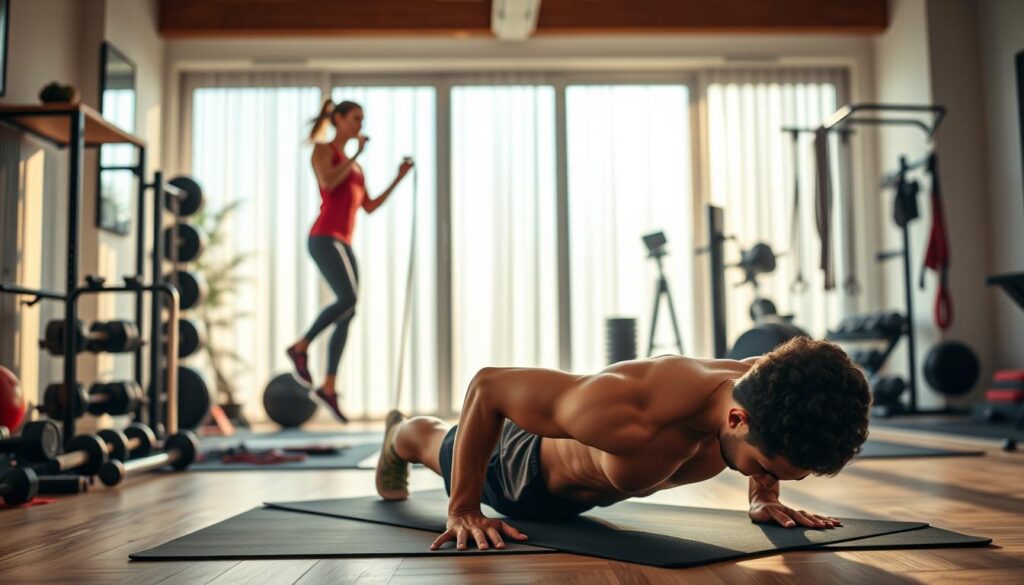
Strength training is also vital for weight loss. It builds muscle, which increases your resting metabolic rate. This means your body burns more calories at rest. Include exercises like push-ups, squats, and weightlifting in your routine.
Beginners should start with bodyweight exercises or light weights. As you get stronger, increase the intensity. Aim for two to three strength training sessions a week, focusing on different muscles each time.
High-Intensity Interval Training (HIIT)
HIIT involves short, intense workouts followed by brief rests. It’s great for weight loss because it burns calories during and after the workout. Your metabolism stays high for hours.
A HIIT session might include 30 seconds of intense exercise like burpees, followed by 30 seconds of rest. Repeat this for 15-20 minutes for a full workout.
By mixing these workouts into your routine, you can create a varied and effective weight loss plan. This keeps you engaged and motivated.
Creating a Weekly Workout Schedule
A well-planned weekly workout schedule is key to losing weight. You need to mix different workouts and rest days to reach your goals. This balance helps you stay on track.
How to Structure Your Week
When planning your workouts at home, mix cardio exercises, strength training, and flexibility workouts. This keeps your routine fresh and prevents getting stuck. For example, you could do cardio three days a week, strength training two days, and one day for flexibility or rest.
Here’s a simple plan to follow:
- Monday: Cardio day (jogging, cycling, or jumping jacks)
- Tuesday: Strength training (upper body)
- Wednesday: Cardio day (HIIT or steady-state cardio)
- Thursday: Strength training (lower body)
- Friday: Cardio day (dancing, swimming, or rowing)
- Saturday: Active recovery (yoga or a light walk)
- Sunday: Rest day
Incorporating Rest Days
Rest days are vital for muscle recovery and growth. They let your body fix the damage from workouts. Make sure to include at least one or two rest days in your plan.
Active recovery days, like yoga or a walk, are also good. They keep your blood flowing and muscles flexible without too much strain.
To lose weight effectively at home, it’s not just about exercising. You also need to give your body time to recover. This balance is essential for lasting weight loss.
Bodyweight Workouts for Weight Loss
Bodyweight exercises are a great way to lose weight at home. You don’t need any special equipment. These exercises can be adjusted to fit your fitness level, making them perfect for beginners.
Advantages of Bodyweight Exercises
One big plus of bodyweight exercises is how easy they are to do. You can do these effective home workouts anywhere, like at home, in a park, or while traveling. They work many muscles at once, helping you burn calories and get stronger.
Another great thing is how versatile bodyweight exercises are. You can change how hard your workout is by doing more reps, sets, or harder exercises. This makes it easy to tailor a home workout plan to your goals and fitness level.
Sample Bodyweight Routine
Here’s a simple yet effective bodyweight routine for your workouts to lose weight at home:
- Push-ups: 3 sets of 10-12 reps
- Squats: 3 sets of 15-20 reps
- Lunges: 3 sets of 10-12 reps per leg
- Plank: 3 sets, holding for 30-60 seconds
- Glute bridges: 3 sets of 12-15 reps
Do this routine 3-4 times a week. Remember to take rest days for your muscles to recover. As you get stronger, you can make your workouts harder by adding more reps, sets, or trying harder versions.
Adding bodyweight exercises to your routine can help you reach your weight loss goals. You don’t need any special equipment, making it a convenient and effective home workout option.
Incorporating Cardio into Your Routine
Cardio exercises are key for losing weight. There are many fun ways to add them to your home workouts. Doing cardio helps you burn calories at home and reach your weight loss goals.
Fun Cardio Alternatives
Traditional cardio like running or cycling can get boring. But, there are many fun alternatives you can try at home:
- Dancing: Put on your favorite music and dance around your living room. It’s a great way to get your heart rate up and have fun.
- Jumping Rope: Jumping rope is a high-intensity cardio workout that can be done with minimal equipment.
- High-Intensity Interval Training (HIIT): Incorporate HIIT into your routine with bodyweight exercises like burpees, jump squats, or mountain climbers.
- Stair Climbing: If you have access to stairs, climbing up and down can be an effective cardio workout.
Duration and Intensity for Maximum Burn
To burn the most calories, knowing the right workout duration and intensity is key. Here are some tips:
- Duration: Aim for at least 20-30 minutes per session. But, even shorter sessions can work if you’re doing high-intensity workouts.
- Intensity: Mix between moderate and high intensity. For example, alternate between jogging in place and sprinting in place.
- Progressive Overload: Gradually increase the intensity or duration of your workouts as you get fitter to continue challenging yourself.
By adding these fun cardio options and adjusting the duration and intensity, you can make a great weight loss exercise routine. It will keep you engaged and motivated.
Strength Training for Beginner Fitness
Starting your fitness journey? Adding strength training can change the game. It’s great for slim down workouts and boosts your health and fitness.
Strength training is key for beginners. It builds muscle, strengthens bones, and boosts metabolism. With home fitness exercises that focus on strength, you’ll get a balanced body and better health.
Benefits of Strength Training
Doing strength training routines has many perks, including:
- Increased muscle mass and strength
- Improved bone density
- Enhanced metabolic rate
- Better body composition
These benefits lead to a healthier, stronger body. It makes daily tasks easier and lowers injury risk.
Simple Strength Exercises to Start With
Beginners should start with easy yet effective exercises. Here are some home fitness exercises to begin with:
| Exercise | Repetitions | Sets |
|---|---|---|
| Squats | 10-12 | 3 |
| Push-ups | 8-10 | 3 |
| Lunges | 10-12 (per leg) | 3 |
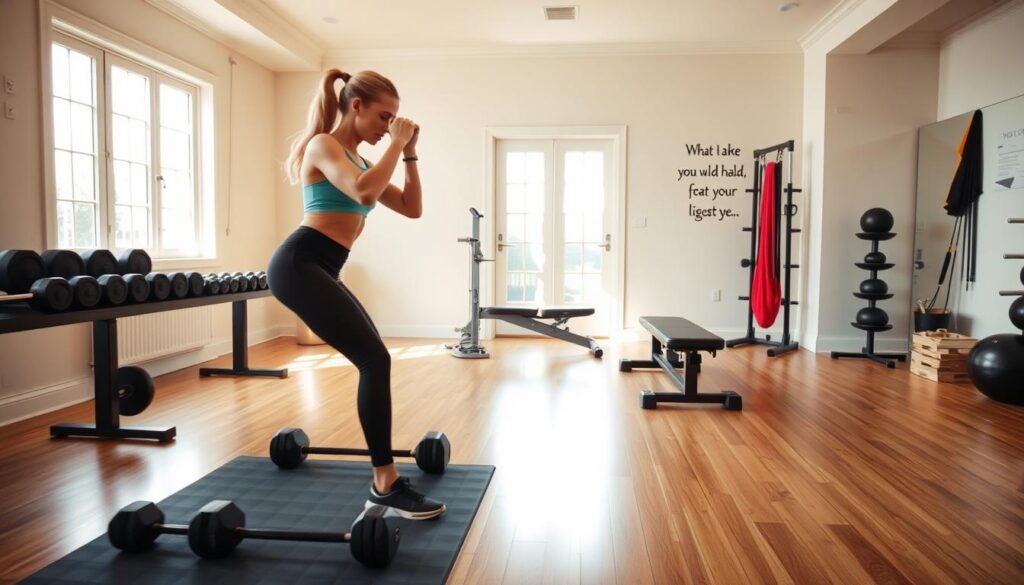
These exercises are basic and can be adjusted as you get better. The secret to success is being consistent and gradually getting better.
By adding these simple strength training routines to your routine, you’ll reach your fitness goals. You’ll enjoy a stronger, healthier body.
The Role of Nutrition in Weight Loss
While effective home workouts are key, a balanced diet is just as important for losing weight. You can’t outrun a bad diet, so focus on what you eat as much as how you exercise.
Nutrition is a big part of your weight loss journey. It’s not just about cutting calories. It’s about eating the right foods to support your home workout plan and health.
Complementing Workouts with a Balanced Diet
A balanced diet should include a variety of nutrient-dense foods:
- Vegetables: Aim for a rainbow of colors to ensure a broad range of vitamins and minerals.
- Fruits: Enjoy a variety of fruits, but be mindful of portion sizes due to natural sugars.
- Protein: Include lean proteins like chicken, fish, and legumes to support muscle growth and repair.
- Whole Grains: Choose whole grains over refined grains for more fiber and nutrients.
- Healthy Fats: Nuts, seeds, avocados, and olive oil are great sources of healthy fats.
Portion control is also vital. Eating large portions can lead to consuming more calories than you need, hindering your weight loss efforts. Use smaller plates and be mindful of serving sizes.
Hydration Tips for Effective Workouts
Staying hydrated is key for both workouts and overall health. Here are some hydration tips:
- Drink water throughout the day, not just during workouts.
- Monitor your urine output; it should be pale yellow or clear.
- Avoid sugary drinks and caffeine, which can dehydrate you.
- Consider electrolyte-rich beverages or supplements during intense or long workouts.
Proper hydration helps your body function at its best, supporting your lose belly fat exercises and fitness goals. By combining a balanced diet with regular hydration, you’ll be well on your way to achieving your weight loss objectives.
Keeping Motivated at Home
Staying motivated at home can be tough. But, with the right strategies, you can reach your weight loss goals. Working out at home is convenient, but it can also make you feel too relaxed.
Setting Realistic Goals
To stay motivated, setting realistic goals is key. Having clear, reachable goals keeps you focused. Start by deciding what you want to achieve, like losing weight or mastering a tough routine.
- Be specific: Clearly define your goals, such as “I want to lose 10 pounds in 3 months.”
- Make it measurable: Quantify your goals so you can track progress.
- Aim for attainability: Ensure your goals are realistic based on your current fitness level.
Tracking Your Progress
Tracking your progress is another great way to stay motivated. Seeing how far you’ve come can be a big motivator. Use a fitness journal or a mobile app to log your workouts and track your weight loss.
Regularly reviewing your progress helps you identify patterns and stay consistent. Celebrate your small victories to keep yourself motivated and engaged.
By using these strategies, you can keep your motivation up and reach your weight loss goals through your at-home workout routine.
Overcoming Common Challenges
Starting a home workout plan can face some challenges. You need more than just enthusiasm to stay on track. You need a plan to beat the obstacles that come your way.
One big challenge is distractions that can mess up your workout. Having a dedicated workout space at home can help a lot. It doesn’t have to be big; even a small, clean area works well.
By setting aside a specific area for workouts, you tell yourself and others it’s time to exercise. This helps avoid interruptions.
Dealing with Distractions
To fight distractions, try these tips:
- Work out when you’re less likely to be interrupted.
- Use apps or tools to keep your focus on the workout.
- Tell your family or roommates about your workout times to avoid being stopped.
These steps help you create a space that supports your effective home workouts. You can burn calories at home more easily.
Staying Accountable
Being accountable is key to keeping up with your home workouts. Setting clear goals and tracking your progress is a good start. Telling a friend or family member about your goals adds motivation.
Keeping a workout log or using a fitness app also helps. It lets you see how you’re doing and make changes if needed. Celebrating your small wins keeps you motivated.
With these strategies, you can beat common home workout challenges. You’ll stay on track with your fitness goals. Your home workout plan will be effective and lasting.
Measuring Your Success
To reach your weight loss goals, it’s key to track your progress and tweak your plan as needed. Monitoring your success keeps you motivated and focused. This is true for any weight loss method, like exercises or workouts.
Tracking Your Progress
Use a mix of methods to track your weight loss. This includes weighing yourself, checking body fat percentage, and taking progress photos. Regularly checking these will show you patterns and where to improve in your fitness plan.
Adjusting Your Fitness Plan
When tracking your progress, be ready to change your workout and diet plans. If results aren’t what you hoped for, think about tweaking your slim down workouts or diet. Making changes based on data helps you get better results and reach your goals.
FAQ
What are the most effective workouts to lose weight at home?
To lose weight at home, mix cardio, strength training, and HIIT. Include bodyweight exercises like push-ups, squats, and lunges in your routine.
How often should I work out at home to lose weight?
Aim to work out 3-4 times a week, for at least 30 minutes each time. Adjust based on your fitness level and goals.
Do I need any equipment to work out at home?
You don’t need much equipment to work out at home. Bodyweight exercises are great. You can also use household items like water bottles as weights.
How can I stay motivated to work out at home?
Stay motivated by setting goals and tracking your progress. Having a workout buddy helps. Try new exercises and reward yourself for milestones.
What role does nutrition play in weight loss?
Nutrition is key for weight loss. Eat a balanced diet that supports your workouts. Focus on nutrient-dense foods, control portions, and stay hydrated.
How can I measure my weight loss progress?
Track your weight, body fat percentage, and take progress photos. Monitor waist circumference and overall health improvements.
What are some effective home workout plans for weight loss?
Effective plans include cardio, strength training, and HIIT. Follow fitness videos or apps, or create your own routine.
How can I incorporate cardio into my home workout routine?
Add cardio with jumping jacks, running in place, or dancing. Use a jump rope, follow cardio videos, or use a cardio machine.
What are some tips for staying accountable while working out at home?
Share your fitness goals with friends or family. Join fitness communities or online groups. Track your progress and schedule workouts like appointments.