How to Lose Weight. Are you tired of fad diets and exercise routines that promise quick fixes but deliver little in the long run? You’re not alone. Many women struggle to find a weight loss approach that truly works for them.
Losing weight is not just about dieting or exercising; it’s about adopting a holistic approach. This includes healthy eating, regular physical activity, and stress management. Natural remedies and herbal supplements can also support this journey.
By focusing on sustainable lifestyle changes and using natural remedies, you can achieve a healthier, more balanced you. This guide will help you create a personalized weight loss plan that works for you.
Table of Contents
ToggleUnderstanding Belly Fat and Its Causes
Belly fat comes from a mix of science, hormones, and lifestyle. Knowing these factors helps create a good weight loss plan.
How to Lose Weight: The Science Behind Belly Fat
Belly fat, or visceral fat, is more than just a look issue. It’s a health risk. It wraps around organs in the belly and can cause diabetes, heart disease, and metabolic syndrome. The science behind it includes how fat is stored, genetics, and metabolism.
Visceral fat is dangerous because it makes inflammatory substances. These can cause insulin resistance, leading to type 2 diabetes. Also, its closeness to organs can harm their function, making health problems worse.
Hormonal Impact on Weight Gain
Hormones greatly affect weight gain and where fat is stored. For women, menopause can cause belly fat. Lower estrogen levels make fat move from hips and thighs to the belly. Knowing this helps tailor a weight loss plan.
Some women face hormonal imbalances like PCOS, leading to weight gain and insulin resistance. Using holistic remedies and lifestyle changes can help.
Lifestyle Factors Contributing to Belly Fat
Lifestyle choices play a big role in belly fat. Eating too much processed food, sugar, and unhealthy fats can cause weight gain. Not exercising enough is also key, as it burns calories and builds muscle, boosting metabolism.
Stress also adds to belly fat. It makes cortisol, a hormone that stores fat around the belly. Reducing stress through meditation, yoga, or herbal medicine is part of a good weight loss plan.
Knowing why we get belly fat is the first step to losing weight and getting healthier. By tackling the scientific, hormonal, and lifestyle reasons, women can make a lasting weight loss plan.
Setting Realistic Weight Loss Goals
A well-defined weight loss plan starts with setting realistic goals. This is a key step towards a healthier you. It keeps you focused and motivated on your journey.
How to Define Your Weight Loss Journey
Defining your weight loss journey means understanding your current health and setting goals. Consider your lifestyle, diet, and health concerns, like anxiety. Herbal remedies for anxiety can help.
First, check your current weight, body composition, and health. Then, set SMART goals. For example, aiming to lose a certain amount of weight in a few months is better than just wanting to lose weight.
The Importance of Tracking Progress
Tracking your progress is key to seeing how well your plan works. Use a journal, app, or spreadsheet for food, activity, and weight loss. This helps spot patterns and keeps you motivated by showing your progress.
Adding herbal treatments to your plan can also boost your mental health. This makes it easier to stay on track with your weight loss goals. Regularly checking your progress lets you celebrate your wins and make better choices for your journey.
Nutrition Basics for Effective Weight Loss
To lose weight well, you need to know the basics of nutrition. A balanced diet helps you lose weight and boosts your health. Knowing what to eat and what to skip is key to your weight loss journey.
Key Nutrients for a Balanced Diet
A balanced diet has several important nutrients for health and weight loss. These include:
- Protein: It’s vital for muscle repair and growth. Good sources are lean meats, fish, eggs, and legumes.
- Fiber: It aids digestion and keeps you full longer. Include whole grains, fruits, and veggies in your diet.
- Healthy Fats: They’re important for hormone production and vitamin absorption. Nuts, seeds, avocados, and olive oil are great sources.
Key nutrients are essential for reaching your weight loss goals. Eating a balanced mix of these nutrients boosts your metabolism and energy.
Foods to Avoid for Optimal Results
Some foods can slow down your weight loss. It’s good to limit or avoid:
- Sugary drinks and foods with lots of added sugars
- Refined carbs like white bread and pasta
- Processed foods, which are often full of unhealthy fats, salt, and sugar
Adding herbal remedies for sleep to your routine can also help with weight loss. Herbal teas like chamomile and lavender are calming.
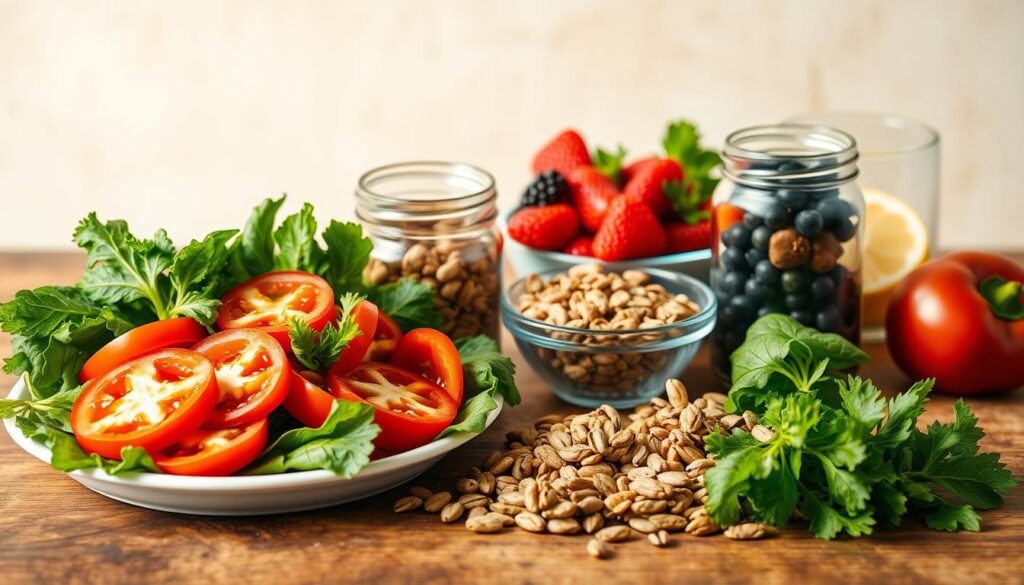
By focusing on key nutrients, avoiding bad foods, and using natural remedies, you can improve your weight loss journey. Remember, a balanced diet is just one part of a successful weight loss plan.
Meal Planning and Preparation Tips
Meal planning is a big help for those trying to lose weight and stay healthy. By planning your meals ahead, you can make sure you eat a balanced diet. This diet supports your weight loss goals. Also, a good meal plan can help with allergy symptoms by using herbal remedies and avoiding common allergens.
Creating a Weekly Meal Plan
To make a good weekly meal plan, first figure out what you need and like to eat. Think about your lifestyle, food allergies, and what you need for weight loss. Then, plan your meals with holistic remedies and foods that are full of nutrients.
- Plan your meals for the week, including breakfast, lunch, dinner, and snacks.
- Make a grocery list based on your meal plan to avoid last-minute, unhealthy choices.
- Prepare meals in advance to save time during the week.
Easy Recipes for Healthy Eating
Adding healthy recipes to your meal plan can be fun and tasty. Here are a few ideas to get you started:
- Grilled chicken with roasted vegetables and quinoa.
- Salads with mixed greens, nuts, and a citrus vinaigrette dressing.
- Soups made with vegetable broth and packed with vegetables and lean protein.
Using herbal remedies like peppermint and chamomile can make your meals taste better and be healthier. For example, adding fresh mint to your salads or using chamomile tea as a base for soups can add a soothing and healthy twist.
Incorporating Exercise into Your Routine
Adding exercise to your life helps with weight loss and boosts health. It can make you feel happier, more energetic, and sleep better. Knowing how exercise fits into your weight loss plan is key.
Effective Workouts for Burning Belly Fat
To lose belly fat, focus on exercises that burn fat and build muscle. Here are some top workouts:
- Cardio Exercises: Running, cycling, and swimming burn lots of calories.
- Strength Training: Lifting weights or doing bodyweight exercises build muscle, which boosts metabolism.
- High-Intensity Interval Training (HIIT): HIIT mixes short, intense exercise with rest. It’s great for losing fat.
Staying Motivated to Exercise
It can be hard to stay motivated, but there are ways to do it:
| Motivation Strategy | Description |
|---|---|
| Set Clear Goals | Know what you want to achieve, like losing weight or getting fitter. |
| Find a Workout Buddy | Working out with a friend is fun and keeps you on track. |
| Track Your Progress | Use a fitness tracker or journal to see how far you’ve come. It’s a great motivator. |
Herbal supplements like green tea extract and ginseng can boost energy and motivation. But, always talk to a doctor before trying new supplements.
The Role of Hydration in Weight Loss
Drinking enough water is essential for losing weight. It helps with metabolism and digestion, which are important for your weight.

Water Intake for Weight Loss
Drinking the right amount of water can help you lose weight. You should aim for at least eight 8-ounce glasses a day. But, this can change based on how active you are, where you live, and your personal needs.
Tips for Adequate Hydration:
- Drink a glass of water before meals to help control appetite.
- Infuse your water with fruits or herbs for a refreshing taste.
- Monitor your urine output; it should be pale yellow or clear.
Benefits of Herbal Teas
Herbal teas are a tasty way to stay hydrated and can help with weight loss. Some teas, like green tea and peppermint, can speed up your metabolism and improve digestion.
Some popular herbal teas for weight loss include:
- Green tea, known for its metabolism-boosting properties.
- Peppermint tea, which can help reduce hunger and improve digestion.
- Chamomile tea, which can help reduce stress-related eating.
Also, herbal remedies like aloe vera tea can support your skin health while you’re losing weight. Adding natural remedies to your weight loss plan can be a smart choice.
Addressing Emotional Eating
Understanding what makes you eat when you’re not hungry can change your weight loss journey. Emotional eating often happens when you’re stressed, anxious, or upset. It’s like using food as a way to cope.
Recognizing Triggers
Identifying what makes you eat emotionally is the first step. It could be stress, sadness, or even certain times or places. Keeping a food diary helps spot patterns and triggers.
Knowing why you eat can help you change. You might find new ways to deal with stress or anxiety. Meditation, exercise, or hobbies can be good alternatives.
Strategies for Mindful Eating
Mindful eating means focusing on your food and drink. Notice the colors, smells, and tastes. It also means paying attention to when you’re hungry or full. This can make you enjoy your food more and eat less out of emotion.
- Eat slowly and savor your food.
- Remove distractions like TV or smartphones during meals.
- Listen to your body and stop eating when you feel satisfied, not full.
Adding herbal treatments and herbal remedies for anxiety to your routine can help too. Herbs like chamomile, lavender, and passionflower can calm you down. They might help with anxiety, a big reason for emotional eating.
The Power of Sleep and Stress Management
Effective weight loss strategies include more than just food and exercise. They also involve getting enough sleep and managing stress. Not enough sleep or too much stress can make it hard to lose weight.
Sleep and stress affect your body’s metabolism. Lack of sleep can mess with hormones that control hunger, making you eat more. Stress can also make your body hold onto fat, mainly around your belly.
How Lack of Sleep Affects Weight
Not sleeping enough can really slow down your weight loss. When you don’t sleep well, your body makes more ghrelin and less leptin. This means you might eat more and choose unhealthy foods.
Also, not sleeping well can make you less motivated to exercise or eat healthy. It’s key to get 7-9 hours of sleep each night to help with weight loss.
Stress Reducing Techniques for Better Health
Managing stress is also vital for losing weight. Stress makes your body produce cortisol, which helps store fat around your waist. Doing things that reduce stress can help.
Good ways to lower stress include meditation, yoga, and deep breathing. Also, using herbal remedies for sleep like chamomile tea or lavender oil can help you relax and sleep better.
By using these methods, you can take a holistic approach to losing weight. This approach focuses on both your body and mind.
Seeking Support on Your Weight Loss Journey
Starting a weight loss journey can be tough. But, having the right support can really help. Think about joining others who want to lose weight too.
Support Groups and Communities
Being part of a community or support group can be very helpful. You can find them online or in person. They talk about different ways to lose weight, like green tea extract or Garcinia cambogia.
Professional Guidance
If you’re having trouble losing weight or have health concerns, get help from a doctor or dietitian. They can make a plan just for you. This plan might include healthy eating, exercise, and herbal medicine.
FAQ
What are some effective herbal remedies for weight loss?
Green tea, Garcinia cambogia, and glucomannan are good for weight loss. They boost metabolism, reduce hunger, and aid digestion.
How can I use herbal supplements to reduce anxiety and stress?
Ashwagandha, passionflower, and kava can ease anxiety and stress. Always talk to a doctor before trying new supplements.
Are there any natural remedies for improving sleep quality?
Yes, melatonin, valerian root, and chamomile tea can help you relax and sleep better. A regular sleep schedule and a cozy sleep space also help.
Can herbal remedies help with skin health?
Turmeric, aloe vera, and tea tree oil are good for your skin. They fight inflammation and protect against damage, helping with acne and eczema.
How can I incorporate holistic remedies into my weight loss plan?
Add herbal supplements, mindfulness, and stress-reducing activities to your weight loss plan. They support your health and well-being.
Are there any herbal treatments that can help with emotional eating?
Yes, St. John’s Wort and passionflower might help with emotional eating. They reduce stress and anxiety. But, always check with a doctor first.
Can herbal teas aid in weight loss?
Herbal teas like green tea, peppermint, and chamomile can aid in weight loss. They boost metabolism, cut hunger, and improve digestion.
How can I stay motivated to exercise and stick to my weight loss plan?
Find a fun workout, set achievable goals, and track your progress. Ginseng and ashwagandha can also boost your energy and motivation.